Apply For Shluchim/Wholesale Account Here


Bubble Light Menorah Guide: Vintage Charm Meets Modern

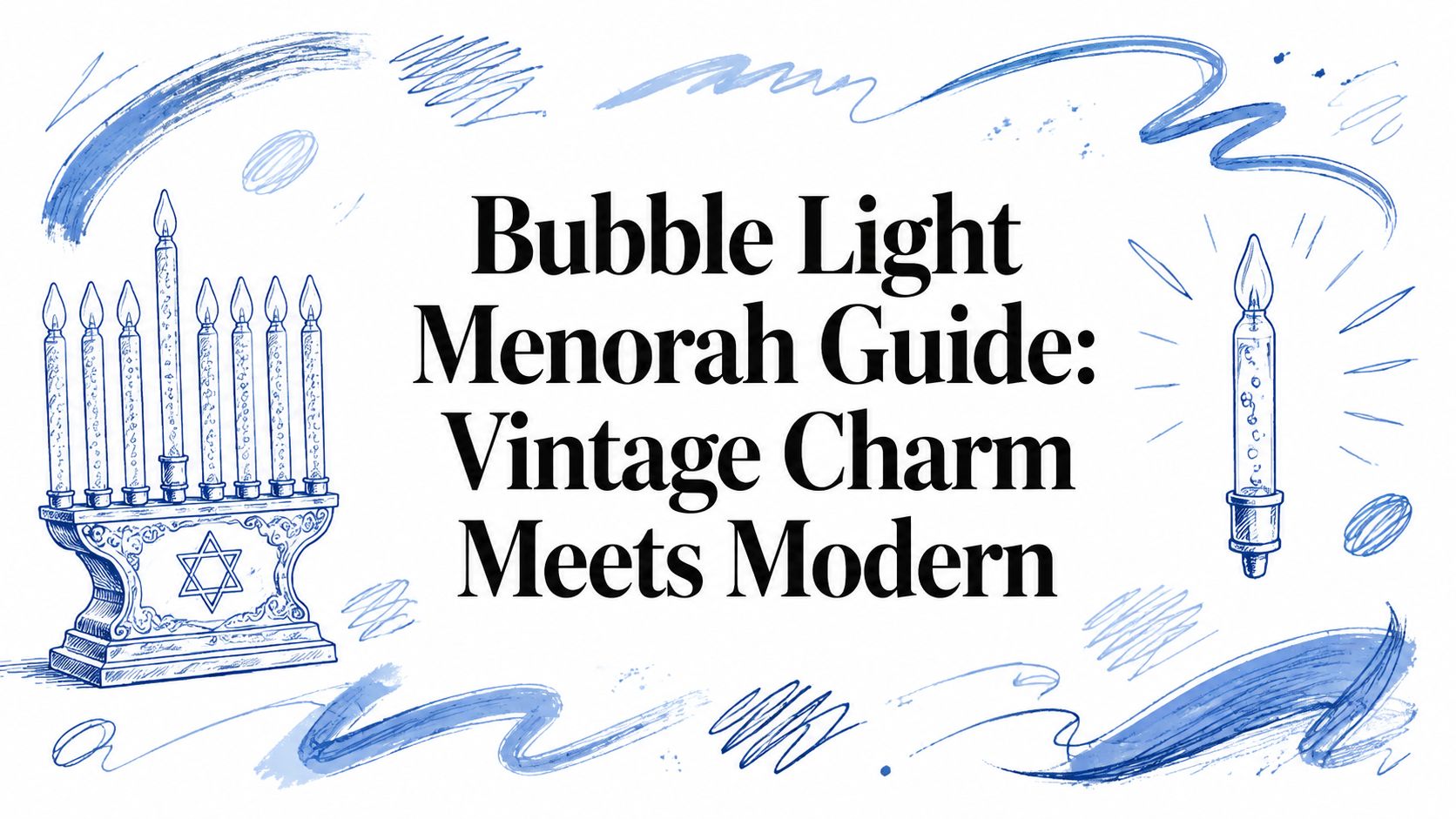
You find it at a vintage shop, tucked between seasonal ornaments and a box of old extension cords. The small menorah has nine upright glass tubes, each filled with colored liquid. Once plugged in, the bulbs glow warmly and slow bubbles begin to rise. It looks festive, familiar, and slightly mysterious, but one question appears immediately: is this a menorah for Hanukkah observance, a piece of holiday decor, or both?
A bubble light menorah sits at that interesting intersection. Its form usually follows the traditional eight-light arrangement plus a shamash, while its animated glow comes from mid-century electric-light technology. Understanding that distinction helps you choose, place, operate, and care for one thoughtfully.
Table of Contents
- What Makes a Bubble Light Menorah Special
- How Bubble Light Menorahs Work
- The History Behind the Bubble Light Menorah
- Where Bubble Light Menorahs Fit in Your Display
- Restoring and Caring for Your Bubble Light Menorah
- Common Questions About Bubble Light Menorahs Answered
What Makes a Bubble Light Menorah Special
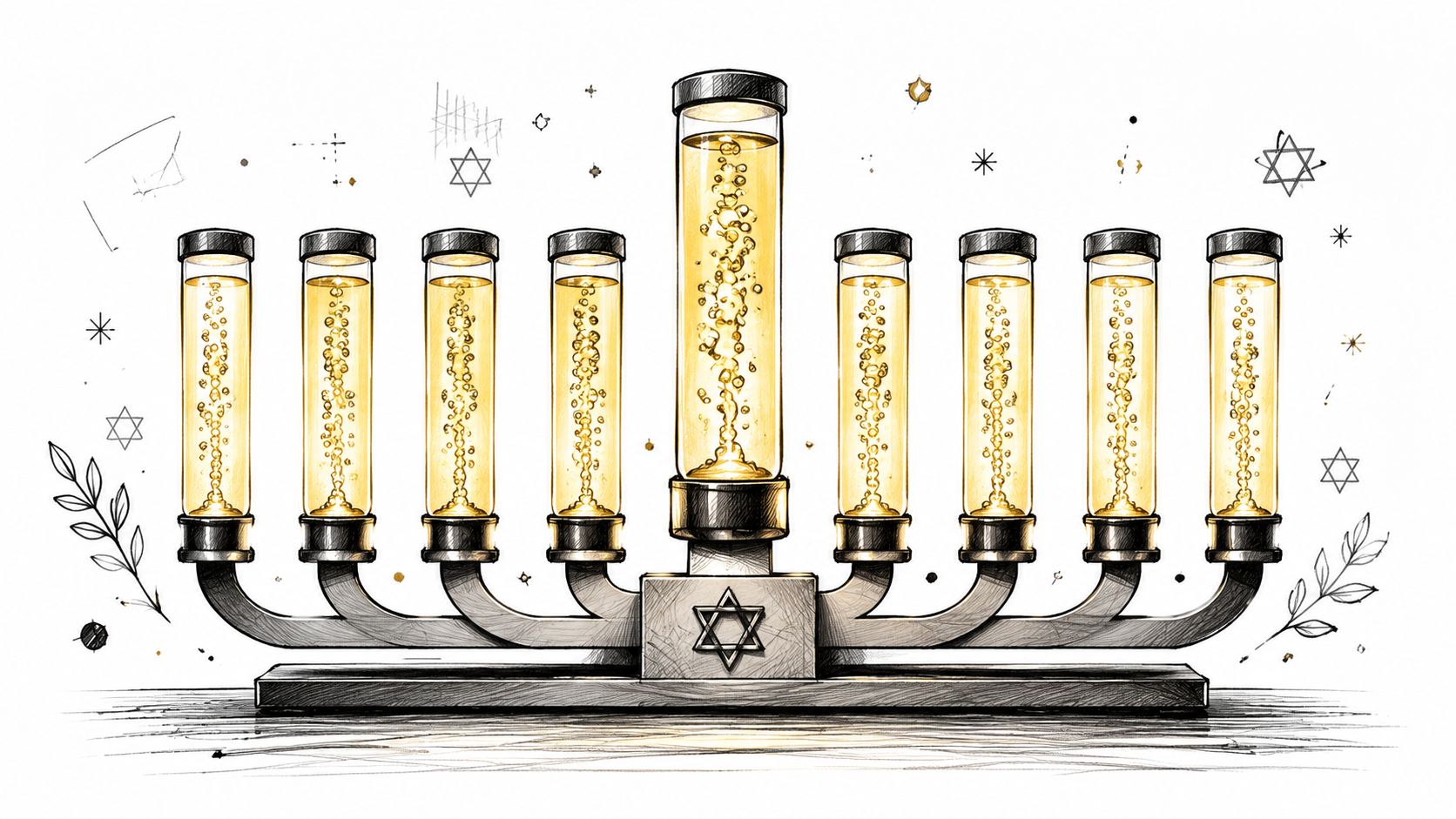
A bubble light menorah has a quality that modern flat LED displays rarely imitate. The glass vials catch the light, the colored liquid warms, and bubbles drift upward in a gentle, irregular rhythm. The result feels less like a programmed screen and more like a small mechanical theater piece, especially when viewed from across a dining room or window.
That movement explains much of the appeal. A standard electric menorah may provide a steady point of light, while a bubble light version adds motion, color, and a distinctly nostalgic atmosphere. Collectors appreciate the period styling, families often enjoy the visible animation, and decorators may choose one because it brings warmth to a room without introducing an open flame.
The design also carries a recognizable mid-century character. Bubble lights were first commercialized for Christmas decor in 1946, after inventor Carl Otis sold the rights in 1938 and NOMA marketed the lights. By 1947, they were being described as “the thing to have” for decorated trees, according to this history of early bubble lights. Their colorful, incandescent, visibly animated appearance later became a natural visual language for decorative menorahs.
Decor and observance are different jobs
The most useful way to think about this object is to separate visual function from ritual function. A bubble light menorah can serve as a beautiful Hanukkah centerpiece, a window accent, or a public holiday display. Whether it fulfills a particular religious lighting requirement is a separate question that depends on the traditions and guidance followed by the household or community.
The distinction isn't meant to diminish the object. Decorative Judaica can express memory, identity, family history, and joy. Readers exploring color choices can also find useful context in this guide to the colors of Hanukkah candles.
Practical rule: Treat a bubble light menorah as illuminated decor unless your rabbi or community authority confirms that its electrical design is appropriate for your intended observance.
For many homes, the most satisfying arrangement is layered. A family may use a traditional candle menorah or an approved electric ritual menorah for the nightly lighting, then place the bubble light menorah nearby as a glowing companion. That approach preserves the meaning of the ritual while allowing the animated piece to do what it does best, create a welcoming holiday mood.
How Bubble Light Menorahs Work
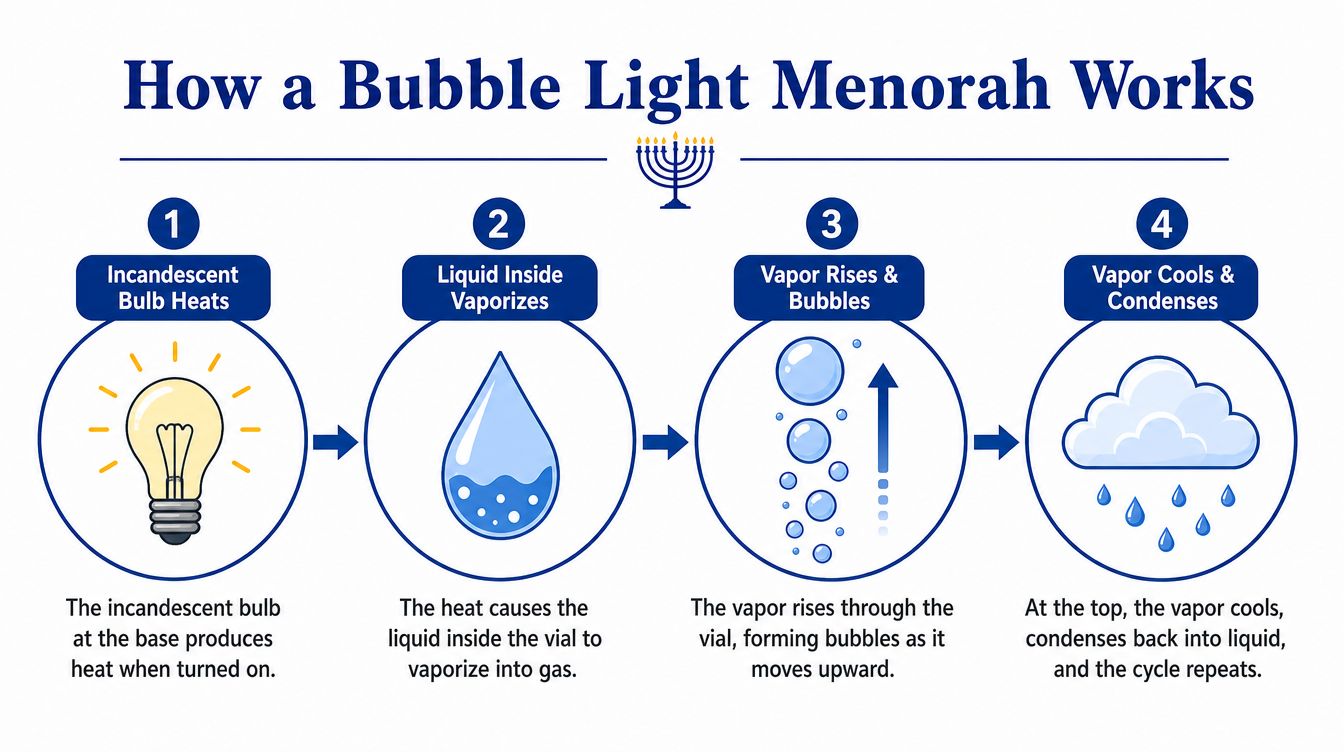
Turn on a bubble light menorah, and the movement begins with heat. Each decorative vial is sealed and filled with liquid. An incandescent bulb beneath or inside the assembly warms the vial until some of the liquid vaporizes. That vapor rises through the liquid as visible bubbles, then cools and condenses, allowing the cycle to repeat.
The process resembles a miniature lava lamp, although the materials and construction vary by model. The bulb provides both light and thermal energy, so it does more than illuminate the display. Replacing it with an incompatible type can change the temperature inside the assembly and prevent the vial from bubbling properly.
The cycle follows four stages:
- The incandescent bulb heats the vial. It produces light and heat within the designed housing.
- The liquid warms and vaporizes. A portion of the sealed liquid changes from liquid to vapor.
- Vapor rises through the vial. The rising vapor creates the familiar animated effect.
- The vapor cools and condenses. It returns to the liquid, ready to repeat the cycle.
Why the wiring matters
Legacy bubble-light assemblies commonly use parallel wiring at full line voltage. Each heating element can therefore operate independently, so one failed vial or bulb does not necessarily stop every other position. The same design makes the electrical parts as important to inspect as the glass tubes.
Check for stable sockets, secure connections, and a base that sits firmly. Do not bypass damaged wiring, connect exposed conductors, or install a replacement bulb solely because it fits. The fixture's heat depends on the relationship among the bulb, socket, vial, and housing. If any one part is wrong, the display may fail to bubble or become unsafe to operate.
A nine-position form adapts the traditional menorah structure. Hanukkah uses eight lights for the eight nights, plus a ninth shamash, or helper light, as described in this overview of the Hanukkah menorah tradition. In a bubble light design, all positions may look similar, so the shamash might be marked by height, placement, color, or labeling.
For comparison with other illuminated formats, this guide to electric Hanukkah menorahs explains features that distinguish electric display pieces from candle-based designs. The practical takeaway is clear: the bubbles come from a controlled heat-transfer cycle, while the menorah shape connects that decorative object to a ritual form. Use the two ideas together thoughtfully, keeping animated decoration distinct from any lighting practice your household follows.
The History Behind the Bubble Light Menorah
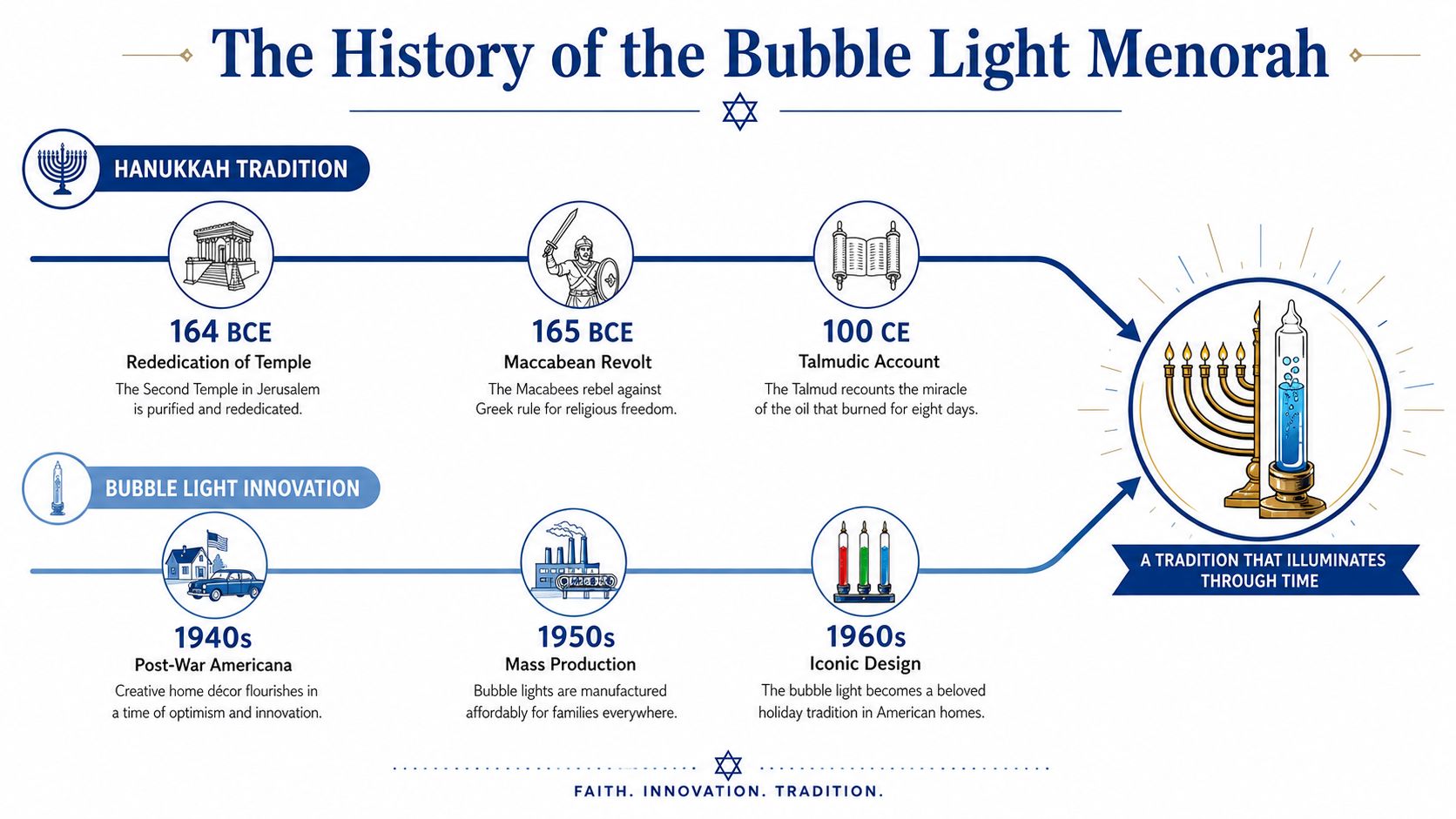
A bubble light menorah sits at the meeting point of two histories. Hanukkah's ritual tradition reaches back to the rededication of the Temple in 164 BCE, while the Talmudic account of the oil miracle appears in Shabbat 21b, dated roughly to 450–550 CE, according to Britannica's Hanukkah history. The familiar menorah structure has eight lights for the eight nights, plus a shamash, the additional helper light.
Bubble lights belong to a far newer history. Carl Otis developed the concept and sold the rights in 1938. NOMA commercialized bubble lights as Christmas decorations in 1946, helping establish the style within colorful electric holiday displays. Their appeal combined novelty with familiarity. Families could bring animated light into seasonal decorating without depending only on candle flames or motionless bulbs.
The two histories meet because designers adapted a popular North American decorative technology to a recognizable Hanukkah form. A bubble light menorah is therefore a modern decorative interpretation, not an ancient Jewish object. Its meaning has two layers: an old symbolic structure and a visual language shaped by postwar consumer culture.
Why the mid-century look still resonates
The post-World War II period helped make animated electric lights a recognizable North American holiday style. Bubble lights seemed novel because their liquid moved, yet their glass tubes, warm bulbs, and saturated colors still felt domestic. They belonged beside vintage ornaments, aluminum trees, and early electric window decorations.
A vintage bubble light menorah can serve as more than a lighting appliance. It can document how Jewish families and designers participated in broader American holiday culture. Its form may reflect a desire to make Hanukkah visible at home through objects that felt contemporary when they were introduced.
That combination also explains its present-day appeal. Contemporary LED products often use thin profiles, bright output, and programmable controls. Bubble lights provide slower movement, warmer color, and a more tactile presence. They show how holiday technology changes while the symbols placed at the center of celebration retain older meanings.
For decoration, this history gives the piece context. For observance, the history does not by itself make a bubble light menorah a substitute for the lighting practice a household follows. Treat it as a bridge between cultural display and ritual form, with each role kept clear.
Collectors should avoid assigning an exact date from appearance alone. Vintage styling can be reproduced, and newer housings can imitate earlier designs. Examine construction, wiring, labels, sockets, and overall condition rather than relying only on color or silhouette.
Where Bubble Light Menorahs Fit in Your Display
A bubble light menorah works best when the setting matches its strengths. In a private home, it can glow on a dining table, shelf, or interior window where viewers can notice the slow bubbling. It creates atmosphere and invites conversation, especially when paired with family ornaments or other Judaica.
A hotel lobby, community center, or event venue may use one as a conversation-starting centerpiece. In these settings, the piece can provide a distinctive visual accent, but organizers should decide separately how the public lighting ceremony or nightly ritual will be represented. A decorative object shouldn't replace an observance standard that the host community expects.
Outdoor installations create a different set of demands. Bubble lights are generally intended for indoor use unless the manufacturer explicitly rates them otherwise. Exposure to moisture, temperature changes, wind, and accidental contact can turn a charming indoor object into an unsuitable public fixture.

A practical comparison
| Setting | Bubble light menorah | Modern LED display menorah |
|---|---|---|
| Dining room or shelf | Warm, moving, nostalgic, and visually intimate | Clean, bright, and easier to control |
| Window display | Attractive when protected indoors behind glass | Better suited to high visibility and programmable sequences |
| Hotel or community centerpiece | Distinctive accent that encourages conversation | More scalable for larger rooms and organized displays |
| Outdoor public installation | Use only when explicitly rated for the environment | A purpose-built weather-resistant model is generally more appropriate |
For a broader styling approach, these Hanukkah decoration tips can help you combine a menorah with surrounding light, color, and table elements without allowing the room to become visually crowded.
The strongest arrangement is often layered rather than competitive. Place a bubble light menorah indoors at eye level, then use a larger modern LED display at an entrance or outdoor gathering point. Menorah's product range includes the Lux 2.0 LED display menorah, with multicolor options, dual-sided illumination, programmable modes, and individually switched LED lights, as well as tabletop and larger installation sizes. A non-lit classic display can also suit venues that want a traditional silhouette without integrated lighting.
A bubble light menorah creates intimacy. A purpose-built outdoor display creates reach. Choose each for the audience it needs to serve.
Restoring and Caring for Your Bubble Light Menorah
Vintage bubble light menorahs deserve a slow inspection before they return to service. The combination of glass, heat, liquid, and line-voltage electricity leaves little room for casual testing. Don't plug in an unknown piece immediately just to see whether it works.
Begin with the exterior
Examine the cord from plug to base. Look for fraying, cuts, stiff insulation, discoloration, or loose strain relief. Check each socket for corrosion and each bulb for damage. A cracked vial, cloudy seal, leaking liquid, or unstable base is a reason to stop and seek qualified repair advice rather than continue testing.
The liquid inside a vial can create poisoning or irritation risks if the glass breaks, as noted in this consumer safety guidance on bubble lights. Keep damaged pieces away from children and pets, avoid touching leaked material with bare hands, and follow local hazardous-waste or household chemical guidance for disposal. Don't open, refill, or glue a sealed vial.
Clean without damaging the system
Unplug the menorah and let it cool before cleaning. Use a soft, dry cloth for dust, then a lightly damp cloth for exterior surfaces if the finish allows it. Keep moisture away from sockets, switches, plugs, seams, and the vial bases. Never immerse the assembly.
If a bulb needs replacement, match the original base type and specified wattage. The bulb must produce the correct heat as well as fit the socket. A brighter or hotter substitute can stress the fixture, while a cooler bulb may leave the bubbling weak or absent.
Store it like glassware
Wrap each vial so it cannot strike another hard surface, and keep the menorah in a rigid container where heavier decorations won't press against it. Store it in a dry indoor location, away from damp basements, hot attics, and areas where boxes are routinely shifted.
Before the next season, repeat the visual inspection. If a cord, socket, seal, or base looks questionable, have the assembly assessed by someone familiar with vintage electrical fixtures. Preservation starts with resisting the temptation to make a fragile object perform beyond its design.
Common Questions About Bubble Light Menorahs Answered
Can an electric bubble light menorah fulfill the ritual?
A bubble light menorah may display the traditional eight-plus-one structure, but decorative resemblance doesn't automatically establish ritual validity. Whether an electric menorah fulfills a particular lighting practice depends on the standards followed by the household or community. If observance matters, ask a trusted rabbi or authority and use a separately approved ritual menorah when needed.
Can I put one outdoors?
Only if the specific fixture is explicitly rated for outdoor use. Many bubble lights are intended for indoor environments, and their glass vials, heat-producing bulbs, seals, and electrical connections need protection from moisture and weather. An indoor window is not the same as an exposed porch or public installation.
Are bubble lights energy efficient?
Their incandescent bulbs generate the heat that makes the bubbles move, so that warmth is part of the design rather than wasted output alone. LED alternatives generally use a different lighting mechanism and may offer programmable operation, lower heat, and easier management, but they won't reproduce the same bubbling effect.
Should I buy vintage or modern?
Choose vintage for character, collectability, and a specific mid-century look, but inspect condition carefully. Choose a modern reproduction when you want fresh wiring, consistent parts, and easier seasonal setup. For demanding outdoor displays, consider a purpose-built weather-resistant LED menorah instead of adapting an indoor bubble light.
Menorah offers indoor and outdoor display menorahs, illuminated LED models, non-lit designs, accessories, and setup resources for homes, institutions, and public venues. Visit Menorah to compare a bubble light menorah with a purpose-built display and choose the combination that respects both your decorative vision and your Hanukkah setting.